Flexible Completion Timeline Options.
190 Instructor hours
Courses
- Electronics 101
- PLC Programming
- Digital Electronics
- Circuit Analysis
- Electronics
- Residential Wiring
- Commercial Wiring
- Electrician Local & National Code
- And more…
Prerequisites
None
Program Objectives
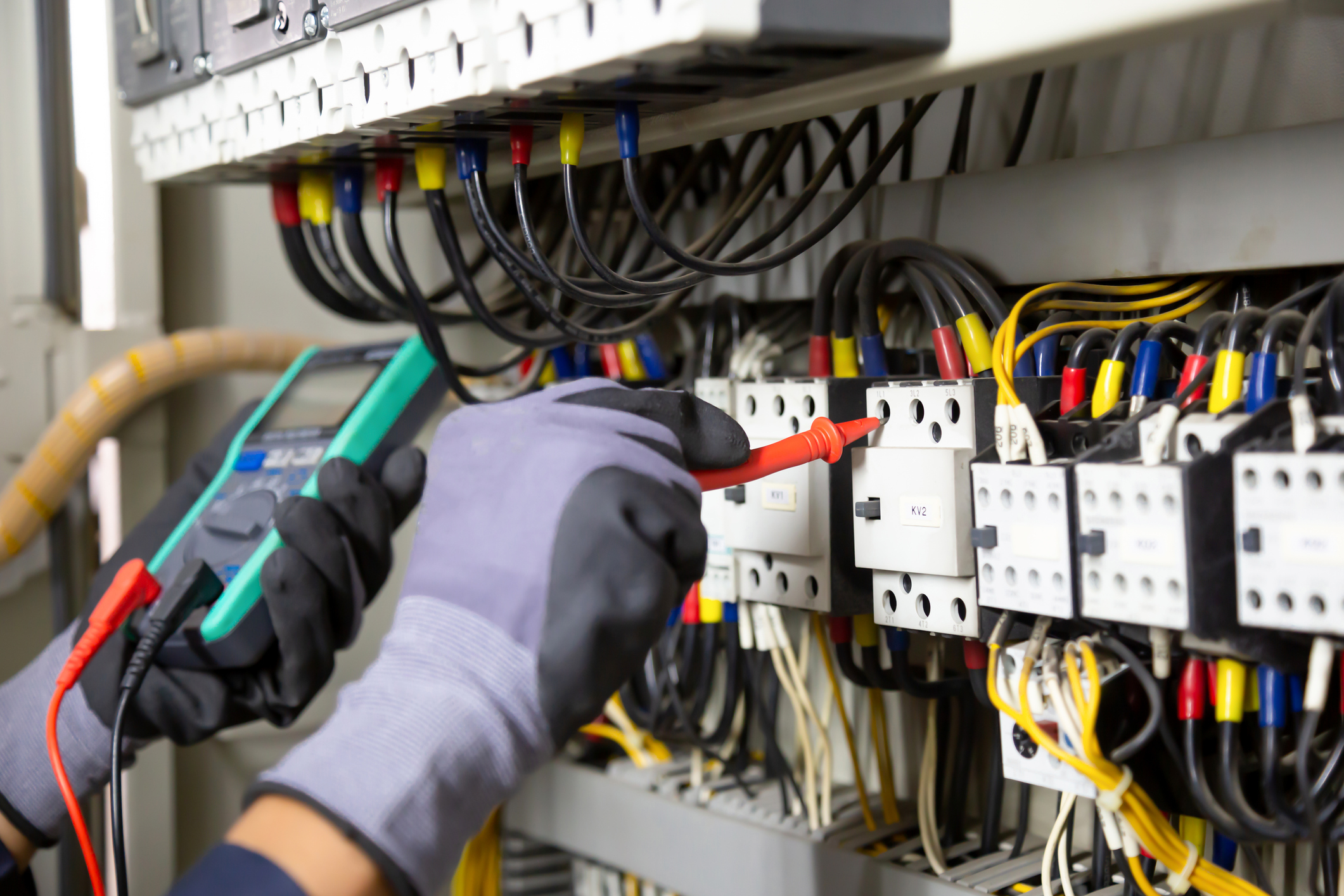
Hands-on training is a vital part of the program. Students work in well-equipped labs using cutting-edge tools and equipment to simulate real-world electrical environments. This training enhances their problem-solving skills and prepares them for the challenges they will encounter as professionals.
What You Will Learn
- Develop proficiency in electrical safety standards and practices.
- Understand the principles of electricity, circuits, and wiring systems.
- Gain hands-on experience with electrical tools and equipment.
- Learn how to troubleshoot electrical systems effectively.
- Build a foundation for further specialization in advanced electrical and electronic fields.
- Be proficient in the use of electrical tools and diagnostic equipment.
- Understand and apply safety standards in all electrical work.
- Have the ability to interpret electrical diagrams and schematics.
- Demonstrate competency in troubleshooting and maintaining basic electrical systems.
- Be prepared to pursue advanced studies or enter the workforce as an entry-level electrical technician.
- And more…

Career Paths
Graduates of the Introductory Electrical Technician program can look forward to diverse career opportunities in industries such as:
- Construction and residential wiring
- Electrical maintenance and repair
- Industrial automation and robotics
- Renewable energy systems and installations
- Electronics manufacturing and servicing
Industry Leaders Hiring Cyber Security Professionals